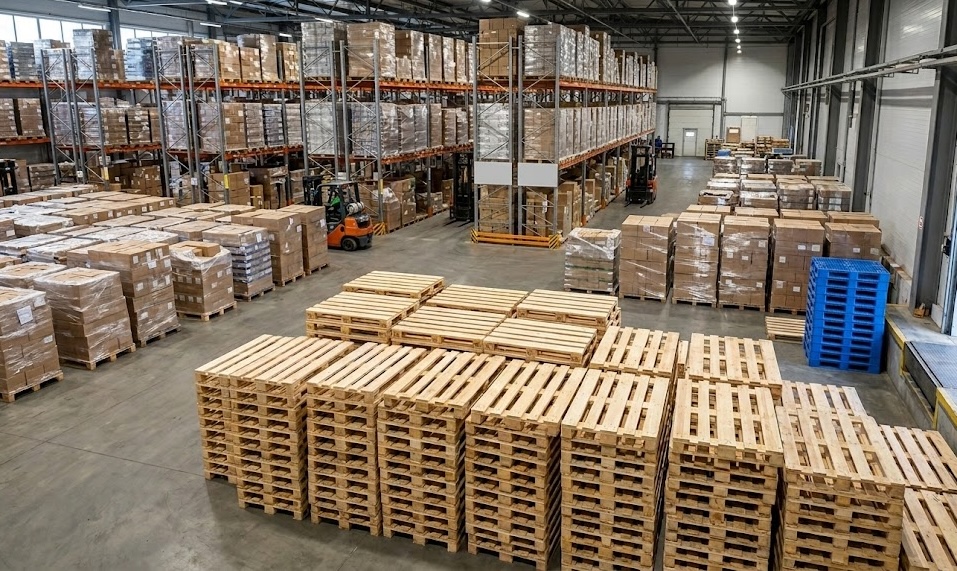
As a company that sells both wood and plastic pallets, we get asked this question all the time: "Should I use wood or plastic?" The honest answer? It depends on your specific application. Let's compare them fairly.
Wood Pallets: The Classic Choice
Advantages
- Cost: Significantly less expensive upfront, especially used wood pallets. A used Grade B wood pallet might cost $7 while a comparable plastic pallet runs $35-$60.
- Repairability: Wood pallets can be repaired easily and inexpensively. A broken board costs a couple of dollars to replace.
- Recyclability: Wood is biodegradable and infinitely recyclable. It can be ground into mulch, used as biomass, or composted.
- Grip: Wood surfaces provide natural friction, which helps keep loads stable during transport.
- Availability: Wood pallets are ubiquitous and available everywhere in virtually any size and configuration.
Disadvantages
- Susceptible to moisture, mold, and insects if not properly treated
- Heavier than plastic alternatives (50-70 lbs vs. 15-30 lbs typically)
- Splinters and protruding nails can cause injury or product damage
- Shorter lifespan in harsh or wet environments
Plastic Pallets: The Modern Alternative
Advantages
- Durability: Resistant to moisture, chemicals, and insects. Won't rot, splinter, or harbor bacteria.
- Weight: Generally lighter than wood, reducing shipping costs over time.
- Consistency: Manufactured to exact specifications every time. No variation in quality.
- Cleanability: Can be washed and sanitized easily — ideal for food and pharmaceutical industries.
- Longevity: Can last 10+ years in closed-loop systems with proper care.
Disadvantages
- Higher upfront cost (3-8x more expensive than used wood)
- Cannot be easily repaired — when they break, they're often done
- Slippery surface can cause load shifting
- Not readily recyclable in all areas
- Made from petroleum-based materials
When to Choose Wood
Wood pallets are ideal for one-way shipping, general warehousing, industries where cost is paramount, and situations where pallet return is impractical. They're also the better environmental choice when sourced from sustainable operations and recycled properly.
When to Choose Plastic
Plastic pallets shine in closed-loop systems (where pallets are returned), cleanroom environments, food and pharmaceutical applications requiring strict hygiene, and automated warehouse systems that benefit from consistent dimensions.
Our Honest Take
For 80% of applications, used wood pallets are the most practical and economical choice. But for specific high-hygiene or closed-loop applications, plastic pallets can deliver excellent long-term value despite the higher upfront cost. We carry both because we believe in matching the right product to the right application.