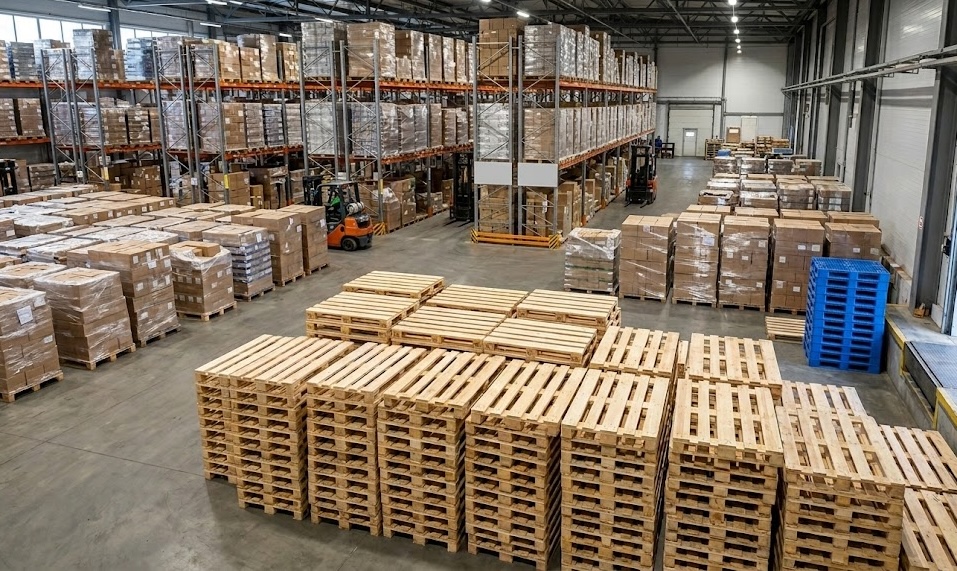
At Raleigh EcoPallet, we're proud of our 95% material recovery rate. But what does that actually look like in practice? Today, we're pulling back the curtain on our recycling facility to show you exactly how we turn old, damaged pallets into valuable resources.
Step 1: Collection and Sorting
It all starts with collection. Our fleet picks up pallets from businesses across the Raleigh-Durham metro area and beyond. When pallets arrive at our facility, they're first sorted into three categories:
- Reusable as-is: Pallets that pass our quality inspection go directly to inventory.
- Repairable: Pallets with minor damage are set aside for our repair team.
- Recyclable: Pallets beyond repair enter our recycling stream.
Step 2: Dismantling
Pallets designated for recycling are carefully dismantled. This isn't just smashing them apart — our team uses specialized equipment to separate boards, stringers, and fasteners while preserving as much usable material as possible. Individual boards that are still in good condition are saved for pallet repair operations.
Step 3: Processing
Wood that can't be reused as boards enters our grinding operation. Industrial grinders break the wood down into various products:
- Mulch: Our most popular recycled product. Landscapers and homeowners love our natural wood mulch.
- Animal bedding: Finely ground wood makes excellent bedding for livestock and equine operations.
- Biomass fuel: Wood chips are used as a renewable fuel source by industrial facilities.
- Compost material: Wood fiber is a valuable carbon-rich ingredient in commercial composting.
Step 4: Metal Recovery
Nails, screws, and other metal fasteners are separated using powerful magnets and collected for metal recycling. Even the smallest components don't go to waste.
Step 5: Quality Control
Every recycled product undergoes quality testing. Mulch is screened for consistent particle size. Biomass fuel is tested for moisture content. Animal bedding is checked for contaminants. We take quality seriously regardless of the end product.
The Numbers
Last year alone, our recycling operation processed over 15,000 pallets that would have otherwise ended up in landfills. That translates to:
- Over 300 tons of wood diverted from landfills
- Approximately 450 trees' worth of lumber given a second purpose
- Reduced methane emissions from wood decomposition in landfills
When you choose to recycle your pallets with us, you're not just cleaning up your warehouse — you're contributing to a circular economy that benefits our entire community.