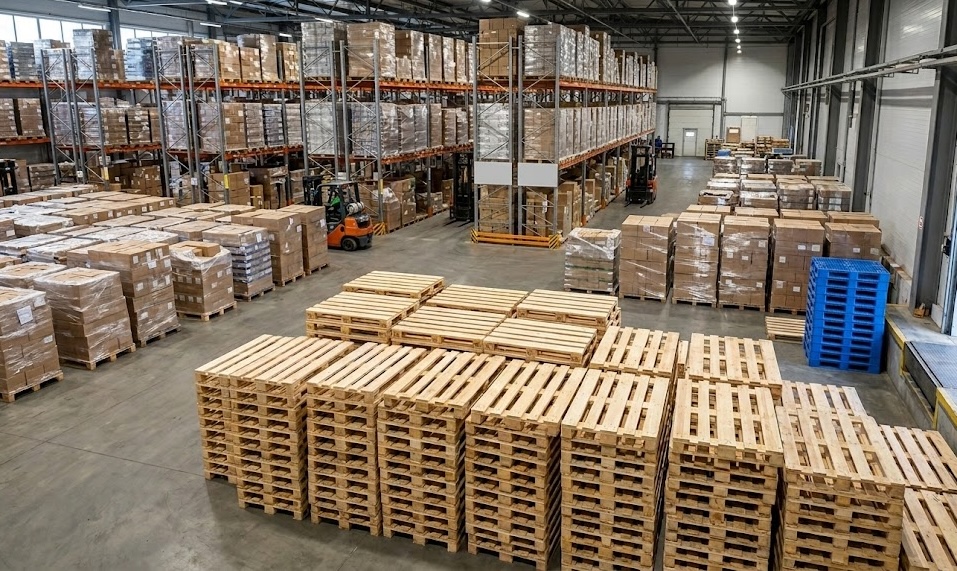
Key Takeaways
- Used pallets cost 40–60% less than new with comparable structural performance
- Pallet grades (A, B, C) define condition — Grade B is the sweet spot for most business applications
- The GMA 48x40 is the most widely used pallet size in North America; verify your racking specs before ordering
- A reputable supplier provides graded, inspected pallets with consistent availability — not just low prices
- Buying in volume and building a long-term supplier relationship maximizes value and reliability
Table of Contents
- 1.Why Buy Used Pallets?
- 2.Understanding Pallet Grades: A, B, and C
- 3.Standard Pallet Sizes and Formats
- 4.How Used Pallet Pricing Works
- 5.What to Inspect Before You Buy
- 6.Choosing the Right Supplier
- 7.How to Calculate How Many Pallets You Need
- 8.ISPM-15: When Heat Treatment Matters
- 9.Avoiding Common Buying Mistakes
If your business ships or stores goods, pallets are a recurring operational cost. Most businesses buy new pallets by default — but used pallets offer equivalent performance at a fraction of the price. This guide walks you through everything you need to know to buy used pallets confidently, from understanding grades and sizes to selecting the right supplier and negotiating the best price.
Why Buy Used Pallets?
The business case for used pallets is straightforward and compelling. A standard 48x40 GMA pallet can be safely used 15–20 times during its lifespan. When you purchase a used pallet, you are acquiring a product that has been used once or several times but still has substantial useful life remaining. Its structural performance — load capacity, stacking strength, forklift compatibility — is identical to a new pallet of the same specification.
The cost difference is significant. New 48x40 pallets typically cost $15–$25 each at current lumber prices. Used Grade A pallets of the same size run $6–$12. Grade B pallets — the most popular choice for warehousing and shipping — cost $4–$8 each. For a business purchasing 2,000 pallets per year, switching from new to Grade B used represents $14,000–$34,000 in annual savings that flows directly to the bottom line.
Cost savings when switching from new to quality used pallets. For most businesses, this is one of the easiest supply chain cost reductions available — with no sacrifice in operational performance.
Understanding Pallet Grades: A, B, and C
Pallet grading is the standardized system used across the industry to communicate a pallet's condition. Understanding grades is essential to getting the right product for your specific application without overspending or under-specifying.
Grade A — Premium Used
Grade A pallets are in like-new or near-new condition. They may show minimal cosmetic wear — slight discoloration or minor surface marks — but have no structural damage and meet full load-bearing specifications. Grade A is ideal for retail display, food and pharmaceutical applications, export shipments, or any use where appearance matters. Expect to pay 65–80% of the cost of a new pallet for Grade A used.
Grade B — Standard Commercial
Grade B is the workhorse of the used pallet market. These pallets show visible wear — staining, darkening of the wood, possible minor repairs — but are structurally sound and fully functional for all standard warehouse and shipping applications. Grade B accounts for the majority of used pallet transactions because it represents the best combination of cost and reliability. Expect to pay 40–60% of the new pallet cost.
Grade C — Economy
Grade C pallets show significant wear and may have more extensive repairs. They are structurally functional for light-duty or one-way shipping applications but are not suitable for heavy loads or repeated use cycles. Grade C is the right choice when you need low-cost pallets for a single trip and will not be retrieving them from the delivery point. Expect to pay 20–35% of the new pallet cost.
For detailed grade definitions, see our pallet grades guide.
Standard Pallet Sizes and Formats
Before ordering, verify which pallet size is compatible with your racking systems, trucks, and material handling equipment. The wrong size creates real operational problems — pallets that hang over racking beams create safety risks, and pallets that are too small can result in product overhang and load instability.
| Size | Common Name | Primary Use |
|---|---|---|
| 48" x 40" | GMA / Standard | General purpose, most common in North America |
| 42" x 42" | Telcom / Paint | Telecommunications, paint industry |
| 48" x 48" | Square | Drums, round containers, beverage |
| 48" x 45" | Auto / Military | Automotive parts, military logistics |
| 800mm x 1200mm | Euro Pallet | European supply chains, imported goods |
| 36" x 36" | Beverage | Beverage industry, half-pallet displays |
How Used Pallet Pricing Works
Several factors influence the price you will pay for used pallets beyond just the grade:
- Order volume: Larger orders always command better per-unit pricing. Discuss volume discounts with your supplier and commit to regular purchase volumes if you can.
- Size: Standard 48x40 GMA pallets are the most common and typically the most competitively priced due to high supply. Unusual sizes command a premium.
- ISPM-15 certification: Heat-treated pallets for export use carry a small premium over non-certified pallets.
- Delivery: Local pickup is cheapest. Delivery pricing depends on distance, order size, and whether a truck or flatbed is needed. Always clarify delivery costs upfront.
- Market conditions: Lumber prices affect new pallet costs and therefore the market for used pallets. Prices fluctuate seasonally and with broader lumber market conditions.
"The best price per pallet comes from a combination of volume, consistency, and a long-term supplier relationship. One-time spot purchases are always more expensive than a standing order with a trusted supplier."
What to Inspect Before You Buy
If you are inspecting pallets at a supplier's yard or receiving a new shipment, check for these critical quality indicators:
- Structural integrity of stringers or blocks — no cracks extending more than halfway through
- Deck board condition — no broken, missing, or excessively splintered boards
- Protruding nails or staples that could damage products or injure workers
- Signs of contamination — chemical stains, unusual odors, visible residue
- Mold, rot, or fungal growth — especially on bottom boards
- Excessive warping or twisting that would cause unstable loads
- IPPC/ISPM-15 mark if international shipping is required
Browse our current used pallet inventory to see the grades and sizes we currently have available.
Choosing the Right Supplier
Not all used pallet suppliers are equal. A good supplier does more than offer a low price — they provide consistent quality, reliable availability, and responsive service. When evaluating a supplier, consider:
- Do they sort and grade pallets consistently, or is it mixed condition?
- Can they provide a reference list of current customers with similar volume needs?
- What is their inspection and quality control process?
- Do they offer a pallet buyback or recycling program for your broken pallets?
- What are their minimum order quantities and lead times?
- Can they scale with your business if volume increases?
- Are they local, reducing transportation costs and delivery lead times?
When you buy pallets from Raleigh EcoPallet, you get graded inventory, consistent quality standards, local Triangle-area delivery, and an optional buyback program for your broken pallets. Contact us to discuss your specific requirements.
How to Calculate How Many Pallets You Need
Before placing your first order, take time to calculate your actual requirements accurately:
- Count current monthly pallet consumption across all receiving and shipping operations
- Factor seasonal variation — many businesses need 20–50% more during peak periods
- Account for attrition — damage, loss, and non-returns typically run 5–15% per cycle
- Maintain a safety stock buffer of 10–20% to prevent stockouts
- Plan for growth if you anticipate volume increases in the next 6–12 months
ISPM-15: When Heat Treatment Matters
If any of your products will cross international borders — even via a third-party freight forwarder — your wood pallets must carry ISPM-15 heat treatment certification. Look for the IPPC wheat symbol mark with "HT" designation burned or stamped into at least two sides of the pallet. Non-certified pallets can be rejected or held at customs, creating costly delays.
For domestic US shipments only, ISPM-15 certification is not required, though it adds no disadvantage. When in doubt, we recommend specifying heat-treated pallets for any inventory that might move into an international supply chain.
Avoiding Common Buying Mistakes
- Buying uninspected, ungraded pallets to save a few cents — the operational risk is not worth the marginal savings
- Over-specifying grade — Grade B performs identically to Grade A for most warehouse applications
- Ordering the wrong size without verifying racking and truck compatibility first
- Ignoring ISPM-15 requirements for products that ship internationally
- Not factoring in delivery costs when comparing supplier quotes
- Failing to account for seasonal demand spikes when calculating order quantities
Ready to Order?
Raleigh EcoPallet has quality graded used pallets available for same-day or next-day availability across the Triangle. Contact us for a fast, competitive quote.
Get a QuoteRaleigh EcoPallet Team
Written by our sales and operations team who have guided hundreds of Triangle-area businesses through their first used pallet purchase. Whether you are buying 50 or 50,000 pallets, we have the expertise and inventory to meet your needs.