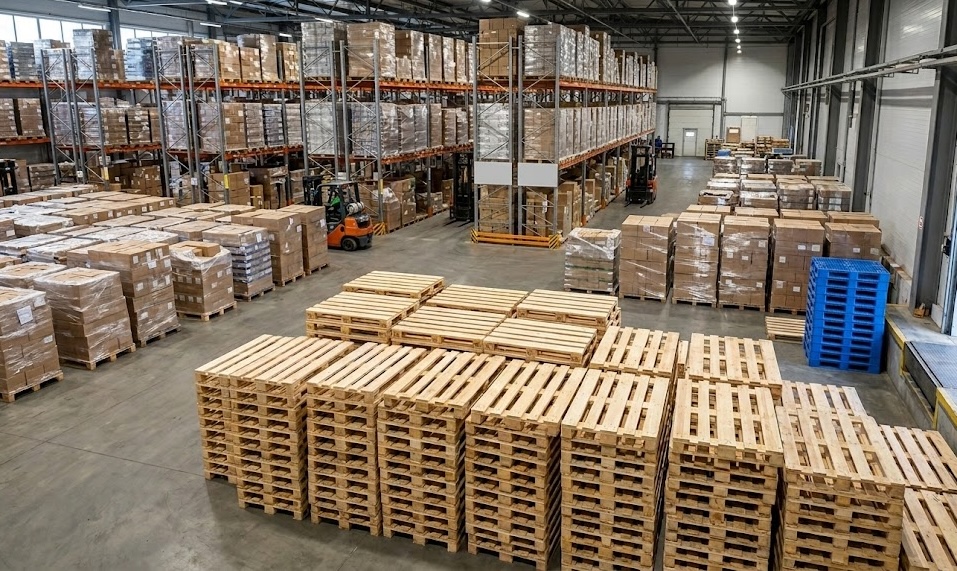
Warehouse safety isn't just about compliance — it's about protecting your team members and your inventory. Improper pallet stacking is one of the most common causes of warehouse accidents, resulting in injuries and damaged goods. Here are seven essential tips every warehouse manager should follow.
1. Inspect Before You Stack
Never stack products on a damaged pallet. Before loading, check for broken boards, protruding nails, cracked stringers, and excessive moisture. A weakened pallet at the bottom of a stack can lead to catastrophic collapse. When in doubt, swap it out.
2. Follow the Weight Limits
Every pallet has a rated capacity — both static (stationary) and dynamic (in motion on a forklift). Exceeding these limits puts strain on the pallet structure and increases the risk of failure. Always match your pallet grade to your load weight. For reference:
- Standard 48x40 Grade A: ~2,500 lbs dynamic / ~5,000 lbs static
- Standard 48x40 Grade B: ~2,000 lbs dynamic / ~4,000 lbs static
- Standard 48x40 Grade C: ~1,500 lbs dynamic / ~3,000 lbs static
3. Stack Evenly and Centered
Loads should be evenly distributed across the pallet surface. Center-heavy or lopsided loads create instability. Use interlocking stacking patterns when possible, and never let products overhang the pallet edges — this compromises both the load and adjacent stacks.
4. Use Stretch Wrap Properly
Stretch wrap is your best friend for load stability. Apply it starting from the base of the pallet (anchoring to the pallet itself) and work your way up with consistent tension. A minimum of three wraps at the base and top, with overlapping layers throughout, provides solid containment.
5. Limit Stack Heights
Higher isn't always better. Follow your facility's maximum stack height guidelines, which should account for both pallet strength and rack capacity. As a general rule, don't stack more than 3 loaded pallets on top of each other without racking support. In racking systems, never exceed the rated shelf capacity.
6. Keep Aisles Clear
It's tempting to stage pallets in aisles during busy periods, but this creates hazards for forklift operators and pedestrians alike. Maintain minimum aisle widths according to OSHA standards (typically 12 feet for standard forklifts) and designate specific staging areas.
7. Train Your Team Regularly
Safety training isn't a one-time event. Conduct regular refresher sessions on proper stacking techniques, forklift operation, and hazard identification. Empower your team members to flag unsafe conditions without fear of reprisal. The best safety culture is one where everyone takes ownership.
Following these guidelines not only keeps your team safe but also reduces product damage, lowers insurance costs, and improves operational efficiency. Safety and productivity go hand in hand.