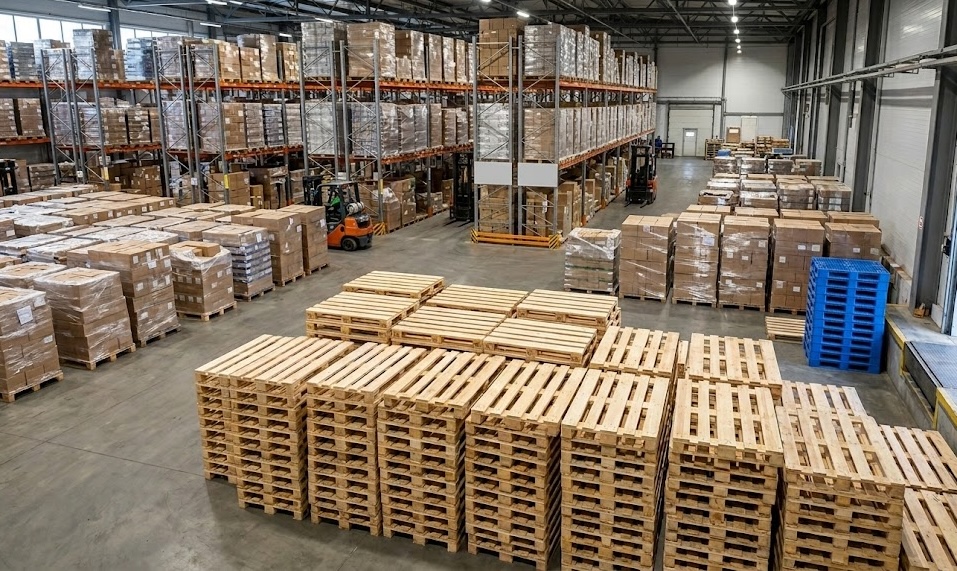
The food industry has some of the most stringent requirements when it comes to shipping and storage materials — and pallets are no exception. Whether you're a food manufacturer, distributor, or retailer, choosing the right pallet isn't just about cost and convenience; it's about compliance, safety, and protecting your brand.
FDA and FSMA Considerations
The Food Safety Modernization Act (FSMA) places responsibility on food businesses to ensure that all materials in contact with food products — including pallets — don't pose a contamination risk. While pallets typically don't come in direct contact with food, they support the packaging that does, and any contamination can transfer.
Key Requirements for Food-Grade Pallets
Cleanliness
Pallets used in food applications should be clean and free from visible contamination, including dirt, stains, chemical residues, and biological matter. This doesn't necessarily mean they must be new — properly cleaned and inspected used pallets can meet food industry standards.
Pest Treatment
All wood pallets used in food facilities should be heat-treated (HT) to eliminate insects and pathogens. This is especially important for operations that undergo GFSI (Global Food Safety Initiative) audits, where untreated or questionably treated pallets can result in findings.
No Chemical Contamination
Used pallets can come from various previous applications. Pallets that may have carried chemicals, pesticides, or other hazardous materials should never be used in food industry applications. This is why sourcing from a reputable supplier with traceable pallet histories is critical.
Structural Integrity
Broken boards, loose nails, and splinters aren't just structural concerns in food facilities — they're foreign object contamination risks. Pallets must be in excellent structural condition with no loose components that could break off and end up in product packaging.
Wood vs. Plastic for Food
Both materials can work in food applications, but each has trade-offs:
Wood: More affordable, but requires more careful inspection and is harder to sanitize thoroughly. Best for single-use or limited-reuse applications where pallets don't enter production areas.
Plastic: Easier to clean and sanitize, resistant to bacterial growth, and won't splinter. Higher cost but preferred for environments with strict hygiene requirements like meat processing or ready-to-eat food production.
Our Food Industry Program
We maintain a dedicated inventory of food-grade pallets that undergo enhanced inspection and cleaning protocols. Every pallet in our food-grade program is:
- Heat-treated and ISPM 15 certified
- Inspected for chemical staining or contamination indicators
- Verified for structural integrity with zero tolerance for loose components
- Cleaned and stored separately from general inventory
- Fully traceable to source
If you're in the food industry and need pallets that meet your compliance requirements, our food-grade specialists can help you find the right solution.